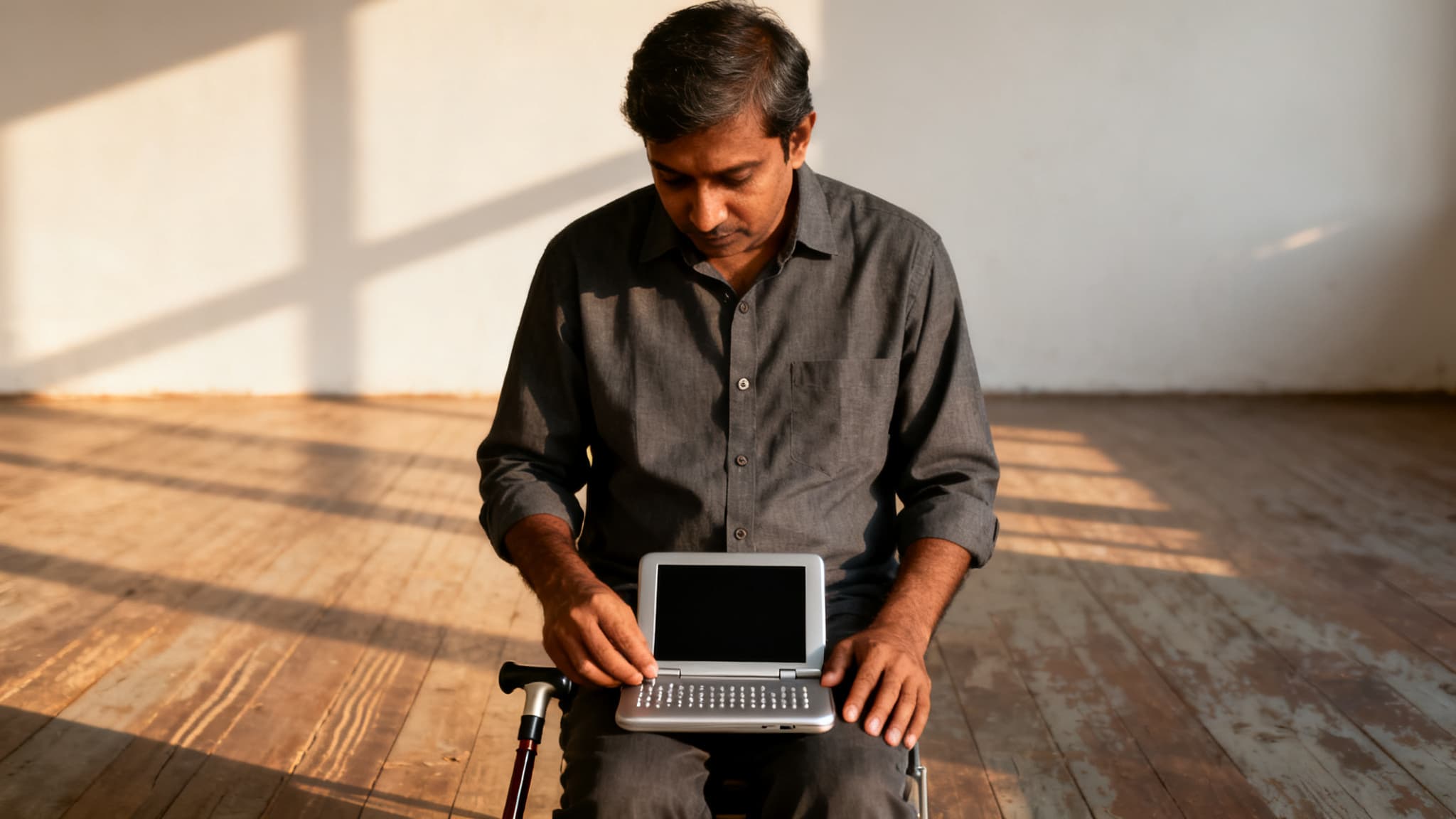
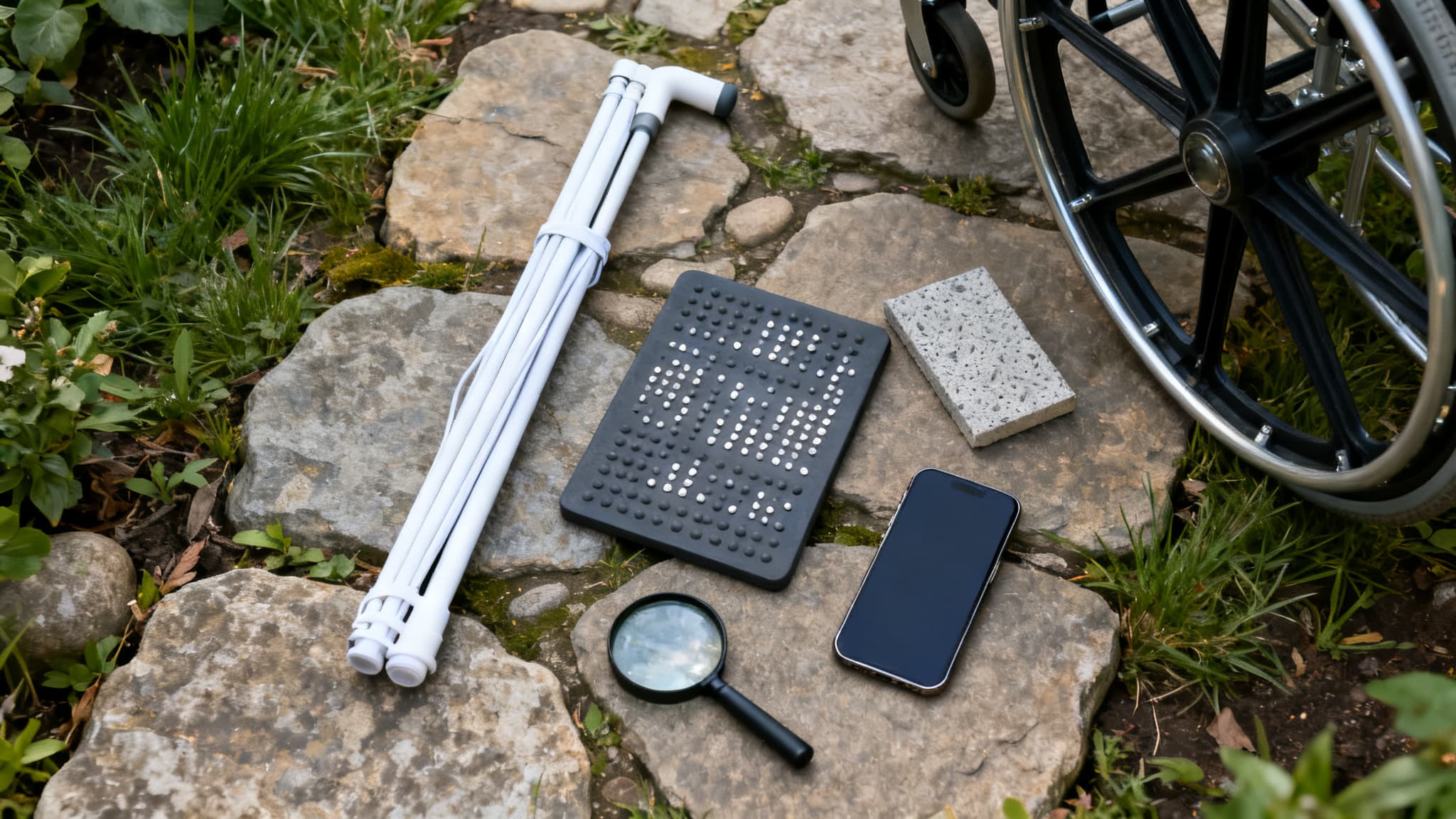
Many disabled people with limited mobility face barriers to computer use due to universal mouse and keyboard assumptions. Switch access, eye tracking, and voice control offer specialized pathways, enabling interaction through minimal movement or voice.
Why CAPTCHA and similar verification steps shut out disabled people, what WCAG and Canadian accessibility law require, and verification methods that work for everyone.
What WCAG 2.0 Level AA requires for captions, transcripts and audio description, and which of those requirements Ontario's AODA makes law, including its two exemptions for video.
The AODA Customer Service Standard represents a foundational shift for Ontario organizations in engaging diverse customers. It's the first regulation under the AODA, setting a baseline for respectful and inclusive interactions.
Accessibility Conformance Reports (ACRs) and Voluntary Product Accessibility Templates (VPATs) are often seen as mere checklist items. However, their true value for Canadian buyers lies in rigorous deconstruction, impacting AODA and Accessible Canada Act compliance.
Despite digital-first strategies, PDFs remain a default for critical information in Canada, often sidelining many citizens. This reliance on inaccessible PDFs creates an invisible bureaucracy, preventing many disabled Canadians from accessing essential services.
Speech recognition systems consistently misinterpret accented speech, creating significant accessibility gaps for many Canadians. This isn't merely an inconvenience; it's a digital exclusion mechanism impacting access to essential services.
Many Ontario employers miss the AODA Employment Standard's proactive mandate, requiring systemic changes to eliminate barriers before they arise. This standard mandates specific requirements for accessibility throughout the entire employment lifecycle, from recruitment to return-to-work procedures.
Effective AODA multi-year accessibility plans are living strategic documents, not just static reports. Begin by conducting a thorough audit of your current accessibility status across all key standards.
Designing accessibility products for Canada's bilingual requirements means engineering a parallel, equally accessible experience in both English and French. Many teams mistakenly treat French as an "add-on," creating unintentional barriers for millions of Canadians.
Data residency in Canada for accessibility software is crucial, moving beyond mere compliance to establish trust and ethical responsibility. It protects sensitive user data, safeguarding disabled individuals from potential discrimination or exploitation.
For accessibility product developers, PIPEDA's limits on data retention present a critical challenge: knowing precisely when to delete voice recordings. Canada's PIPEDA law dictates that voice data must only be retained as long as necessary for its original purpose.
For disabled people, the digital environment often feels like a series of unexpected dead ends. Standard date pickers and dynamic checkout flows frequently become invisible mazes for assistive technology users due to visual-first design patterns.
The 'contact us for accommodation' problem in digital services is a systemic failure, denying independent task completion for disabled users. This approach transforms simple digital interactions into emotionally taxing, bureaucratic hurdles.
What makes government service portals difficult for assistive technology users is often not outright malice, but a widespread organizational blind spot. This focus on legal boxes over lived experience leads to frustration and exclusion for millions of disabled Canadians.
The accessibility friction in Canadian online banking flows creates critical, often invisible, barriers for disabled Canadians. This isn't just inconvenience; it's systemic exclusion from essential financial services due to preventable design oversights.
Multi-step web forms are hard to complete with voice control due to a fundamental mismatch between conversational flow and rigid form structures. Voice control systems often misinterpret commands, leading to frustrating, repetitive corrections.
The core difference between voice-first accessibility tools and accessibility overlays lies in their philosophical approach, not just technology. Overlays superficially alter presentation, while voice-first tools offer deep, bidirectional interaction for true digital inclusion.
The handoff problem arises when voice AI fails to recognize its limitations, creating a fundamental mismatch in conversational control. Users often get trapped in frustrating loops, unable to complete tasks or reach a human, leading to significant drops in satisfaction.
Voice control frequently breaks down on modern web forms, not from lack of processing power, but a fundamental mismatch in language interpretation and form structure. This friction often arises from poorly defined ARIA attributes and non-semantic HTML, hindering reliable navigation for users.
Screen readers and voice-first interfaces differ fundamentally in design philosophy and accessibility objectives, beyond just input methods. Understanding these core distinctions clarifies why voice-first interfaces will not replace screen readers for comprehensive digital access.
Voice-first computer control fundamentally shifts voice from an input alternative to a primary interface, enabling complex workflows for disabled users. Unlike basic assistants, true voice-first systems prioritize eyes-free and hands-free interaction, proving indispensable for those with severe motor impairments.
The Ontario Human Rights Commission (OHRC) views digital accessibility complaints as potential instances of disability-based discrimination, not just technical failures. This means an inaccessible digital service that blocks equal participation can be the basis of a human rights application to the Human Rights Tribunal of Ontario.
Many Ontario organizations still overlook AODA obligations, especially for digital content and employment. On conviction, a corporation can be fined up to $100,000 for each day an offence continues.
The AODA dictates specific accessibility procurement requirements for Ontario public sector organizations, aiming for a fully accessible province by 2025. Many still treat accessibility as a post-purchase add-on, leading to costly retrofits and legal exposure.
Canadian procurement teams must view WCAG 2.1 AA as a vital risk-mitigation framework, not just a technical checklist. It's the blueprint for avoiding legal challenges and ensuring digital solutions are accessible to disabled Canadians.
For federally regulated employers, 2026 marks a pivotal shift under the Accessible Canada Act, moving from planning to demonstrating tangible, integrated progress. Organizations must publish updated plans every three years and progress reports in the years between, showing how accessibility is built into core operations.
Many organizations mistakenly believe provincial accessibility legislation supersedes federal requirements. Understanding whether the Accessible Canada Act (ACA) or Accessibility for Ontarians with Disabilities Act (AODA) applies to your organization is crucial to avoid compliance pitfalls.
Section 14 of Ontario's accessibility regulation sets website rules for designated public sector and large organizations, not for businesses with fewer than 50 employees. Small businesses still have other AODA duties, and meeting WCAG 2.0 Level AA is a good way to serve all customers.