

ACA 2026: Federally Regulated Employer Requirements & Proactive Steps
For federally regulated employers, 2026 marks a pivotal shift under the Accessible Canada Act, moving from planning to demonstrating tangible, integrated progress. Organizations must publish updated plans every three years and progress reports in the years between, showing how accessibility is built into core operations.
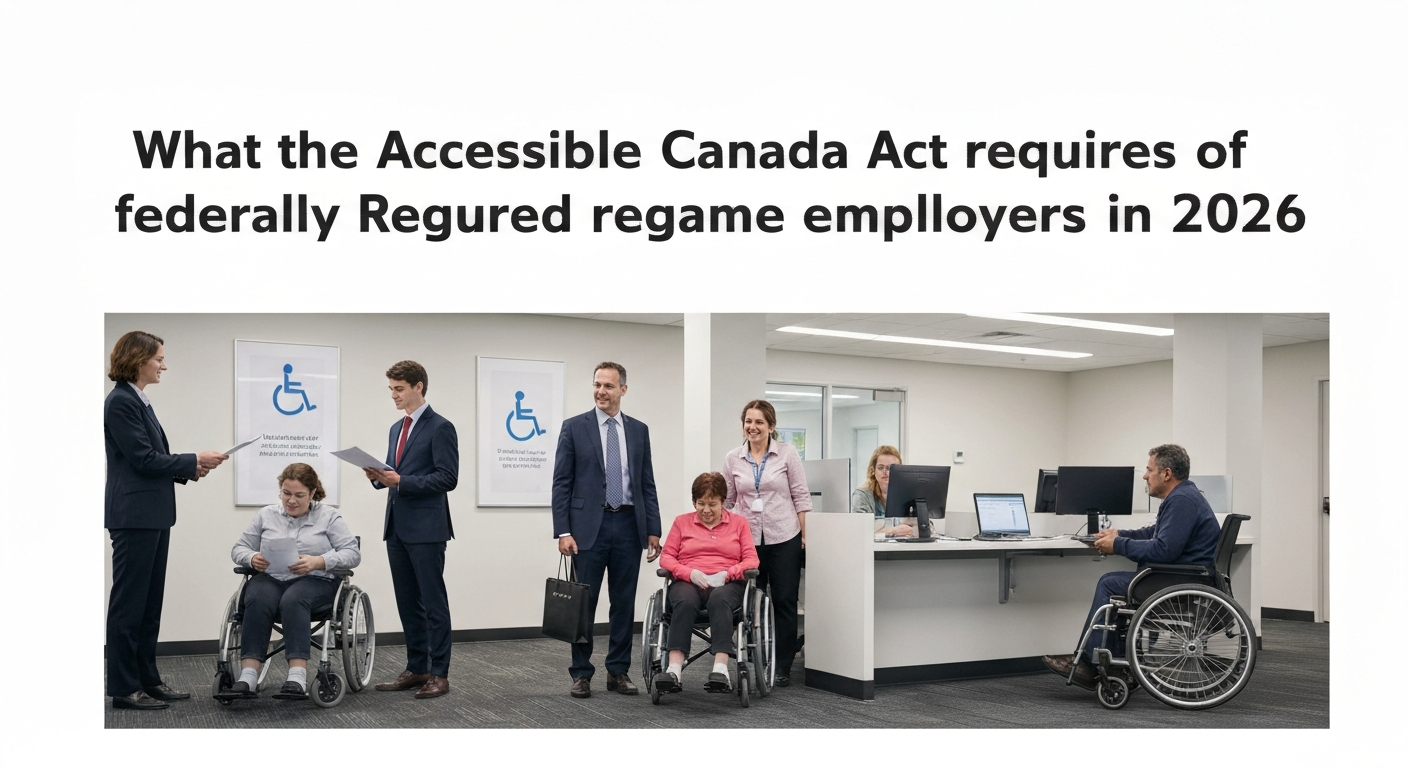
What the Accessible Canada Act Requires of Federally Regulated Employers in 2026
While the Accessible Canada Act (ACA) aims for a barrier-free Canada by 2040, the less obvious truth for federally regulated employers is that 2026 marks a pivotal shift from foundational planning to demonstrating tangible, integrated progress. After their initial accessibility plans, which many published by 2022-2023, federally regulated organizations must publish updated plans every three years, progress reports in the years between, and a feedback process, showing that accessibility is built into core operations, not just an add-on.
The ACA, which received Royal Assent on June 21, 2019, applies directly to federally regulated entities spanning banking, telecommunications, and interprovincial transportation. Its long-term goal for a barrier-free Canada by 2040 impacts all aspects of society, from employment practices to service delivery and the built environment. For 2026, the focus intensifies on accountability: employers must move beyond identifying barriers to actively removing them, detailing these efforts in publicly available documents. This means a shift from policy development to concrete implementation, affecting areas like accessible digital platforms, inclusive hiring processes, and barrier-free physical spaces.
Proactive compliance in 2026 helps mitigate the fear of significant financial penalties and operational disruption often associated with reactive measures. Organizations that view the ACA as an ongoing strategic imperative, rather than a one-time compliance hurdle, will be better positioned. This proactive stance translates complex legal requirements for federally regulated employers into actionable steps, directly addressing the confusion many feel over specific new or intensified obligations for 2026, and prepares them for continued evolution in accessibility standards.
Who is a Federally Regulated Employer Under the Accessible Canada Act?
Many organizations mistakenly believe the Accessible Canada Act (ACA) applies broadly, similar to provincial human rights codes, but its scope is tightly defined: it targets entities under federal legislative authority. Understanding this distinction is the essential first step toward compliance, clarifying exactly what the Accessible Canada Act requires of federally regulated employers in 2026 and beyond.
Federally regulated employers operate in specific sectors explicitly governed by the Parliament of Canada. This includes banks, telecommunications companies like Bell Canada, broadcasters such as CBC/Radio-Canada, and interprovincial transportation providers, airlines like Air Canada, railway companies, and many long-haul trucking operations. Federal Crown corporations, including Canada Post and VIA Rail, also fall under this umbrella. These are distinct from provincially regulated businesses, which answer to provincial accessibility legislation like the AODA in Ontario.
Confirming your organization's regulatory body and specific industry classification is therefore paramount. This clarifies who within your leadership team, from HR to operations, is accountable for driving accessibility initiatives, what specific regulations apply to your services, and how to allocate resources effectively across the ACA's seven priority areas.
Understanding the Core Requirements of the Accessible Canada Act for 2026
The Accessible Canada Act (ACA), enacted in 2019, shifts focus for federally regulated employers by 2026 from planning to demonstrable action. While initial accessibility plans, due largely in 2022-2023, outlined intentions, updated plans and progress reports are where organizations show evidence of barrier identification, removal, and prevention across several key areas. Employers can no longer merely promise; they must show concrete progress.
Specifically, what the Accessible Canada Act requires of federally regulated employers in 2026 is robust implementation of measures to address barriers in seven priority areas: employment, the built environment, information and communication technologies (ICT), communication (other than ICT), procurement, program design and delivery, and transportation. For instance, a federally regulated bank should be able to report progress on removing barriers in its digital banking platforms, not just state an intention to do so. The ACA itself does not require a specific WCAG version. Similarly, an interprovincial trucking company needs to demonstrate accessible hiring processes, from job postings to interview accommodations.
The shift to implementation also means heightened scrutiny. The Accessibility Commissioner possesses powers to investigate complaints and impose administrative monetary penalties for non-compliance. This proactive understanding of implementation helps alleviate the fear of significant financial burden and operational disruption from last-minute changes. For example, delaying a full audit of digital assets until late 2025 will likely lead to rushed, expensive fixes rather than a phased, strategic approach.
To illustrate the scope of these requirements, consider the following key areas and their implications for federally regulated entities:
| ACA Priority Area | 2026 Implementation Focus | Concrete Example (Federally Regulated Entity) | |||||||||||||||
|---|---|---|---|---|---|---|---|---|---|---|---|---|---|---|---|---|---|
| Employment | Accessible hiring, workplace accommodations, career development | A national railway company ensuring all job application portals are screen-reader compatible and offering flexible work arrangements. | |||||||||||||||
| Built Environment | Physical accessibility of facilities, public spaces | A major Canadian bank renovating branches to include power-assisted doors and accessible service counters. | |||||||||||||||
| ICT | Accessible websites, software, internal systems | A telecommunications provider ensuring its customer service app and employee intranet meet WCAG 2.1 AA guidelines. | |||||||||||||||
| Communication (Non-ICT) | Accessible formats for documents, public announcements | A federal Crown corporation providing large-print, braille, or audio formats.
Your 2026 Accessibility Plan: Key Components and Deadlines Your organization's accessibility plan serves as the essential blueprint for achieving a barrier-free environment. Plans must be updated every three years, so many federally regulated employers have already published or are now preparing updated versions of their initial plans.
1
Triennial Updates and RefinementsFederally regulated organizations must publish an accessibility plan every three years. This means the 2026 cycle is crucial for updating previous plans and incorporating lessons learned. A comprehensive plan details how the organization will identify, remove, and prevent barriers across the seven priority areas: employment, the built environment, information and communication technologies (ICT), communication (other than ICT), procurement of goods, services, and facilities, design and delivery of programs and services, and transportation.
2
Core Components and Actionable MeasuresUnder the Accessible Canada Regulations, each plan must include a "General" section with the title of the person designated to receive feedback and contact details, a section for each priority area, and a "Consultations" section. For example, a major Canadian bank might detail plans to implement new accessible ATM interfaces by Q3 2025, or a national railway could outline a Q1 2026 pilot for accessible boarding ramps at specific stations in Manitoba.
3
Consultation with Disabled PersonsA non-negotiable requirement is the development of the plan in consultation with persons with disabilities. This ensures the plan addresses real-world challenges, such as inaccessible digital platforms or physical barriers in office spaces. Consultations might involve focus groups with disabled employees, or partnerships with disability advocacy organizations like Spinal Cord Injury Canada.
4
Accessibility and Publication RequirementsThe completed plan must be published on the organization's primary website and made available in alternative formats upon request. This includes large print, braille, or audio, ensuring broad accessibility for all stakeholders. For instance, an organization must publish its plan in a format that meets WCAG Level AA and be ready to provide it in braille on request. Beyond the Plan: Progress Reports, Feedback, and Ongoing ComplianceBeyond the Plan: Progress Reports, Feedback, and Ongoing ComplianceMerely publishing an accessibility plan does not fulfill the spirit or letter of the Accessible Canada Act (ACA). Federally regulated organizations, such as major banks like RBC or telecom providers like Bell Canada, face ongoing obligations for transparency and continuous improvement, especially as we approach what the Accessible Canada Act requires of federally regulated employers in 2026. This includes annual progress reports and robust feedback mechanisms. Organizations must publish annual progress reports detailing the implementation of their accessibility plans. These reports, typically due on the anniversary of the initial plan's publication, provide a transparent account of achievements, challenges, and adjustments made. For example, a national airline might report on the installation of accessible check-in kiosks at Calgary International Airport, detailing the number of units deployed and initial user feedback, while also acknowledging delays in implementing accessible in-flight entertainment systems across its entire fleet. Establishing an accessible feedback process is also mandatory. This allows disabled people to submit comments on the organization's accessibility plan and any barriers encountered. A federally regulated bank, for instance, must allow feedback by mail, telephone and email, and by any other means it uses to communicate with the public. The organization must acknowledge all feedback received and consider it when updating future accessibility plans and progress reports, ensuring that lived experience directly shapes the path to a barrier-free Canada by 2040. Practical Steps and Best Practices for Implementation by 2026Achieving full compliance with what the Accessible Canada Act requires of federally regulated employers in 2026 demands a strategic, phased roadmap. Many organizations, having submitted initial accessibility plans in 2022-2023, now face the critical task of integrating these commitments into daily operations. The real challenge is moving beyond planning to consistent, measurable implementation. The first step, ideally completed in early 2024, is a comprehensive assessment and gap analysis. This involves auditing current practices against all seven ACA priority areas, including employment, the built environment, and information and communication technologies (ICT). For instance, a major Canadian bank might discover gaps in accessible internal communication platforms or physical branch accessibility for mobility device users. Following this, mid-2024 should focus on strategic planning and resource allocation. This means developing a detailed action plan with clear objectives, timelines, and assigned responsibilities, ensuring necessary budget and human resources are allocated upfront to avoid significant financial burden later. The implementation phase, spanning late 2024 through 2025, involves rolling out initiatives such as accessible technology upgrades, policy revisions, and comprehensive accessibility training for all staff. Responsibility for this phase often falls to a dedicated accessibility lead or a cross-functional team, ensuring that, for example, new HR onboarding software meets WCAG 2.1 AA standards. Ongoing into 2026, robust systems for monitoring, feedback, and reporting are crucial. This includes collecting structured feedback from persons with disabilities about their experiences and preparing annual progress reports for public disclosure. The ACA requires organizations to consult disabled people when preparing accessibility plans and progress reports, and involving accessibility experts throughout the process is good practice. Proactive employers will also use technology, utilizing accessibility checkers for digital content, investing in accessible software solutions, and exploring assistive technologies to improve workplace inclusion and communication for employees across the organization. Navigating Penalties and Ensuring Proactive Compliance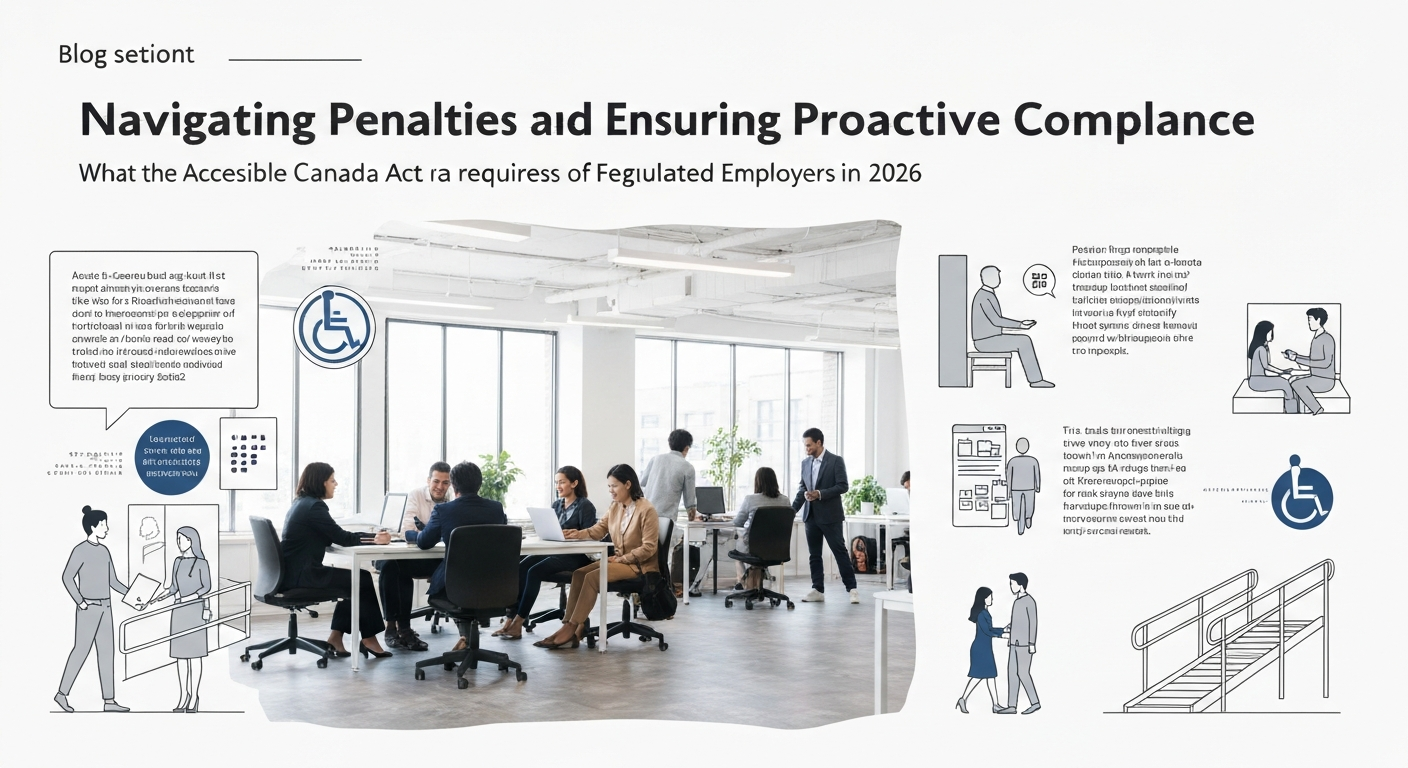 Focusing solely on the punitive aspects of the Accessible Canada Act (ACA) misses a critical point: while penalties are real, the strategic advantage of proactive compliance far outweighs the risk of reactive measures. The Accessibility Commissioner, operating within the Canadian Human Rights Commission, wields considerable authority. This includes the power to investigate complaints from disabled people, conduct compliance audits of federally regulated entities, and issue binding compliance orders. Should an organization fail to meet its obligations, administrative monetary penalties (AMPs) can be substantial, reflecting the financial weight of non-compliance. For instance, a telecommunications provider that fails to set up an accessible feedback process could face administrative monetary penalties and public scrutiny. Beyond direct financial penalties, non-compliance carries a heavy cost in reputational damage and diminished public trust. A federally regulated bank, for example, found to be inaccessible to its disabled customers risks alienating a significant market segment and undermining its brand image. Internally, a perceived lack of commitment to accessibility can erode employee morale and make talent acquisition more challenging, particularly for younger generations who prioritize inclusive workplaces. Proactive compliance, therefore, is not merely about avoiding fines; it’s about building a resilient, ethical, and attractive organization. By embedding accessibility into corporate governance and risk management strategies now, federally regulated employers can ensure sustained compliance with what the Accessible Canada Act requires of federally regulated employers in 2026, avoiding the pitfalls of reactive crisis management and positioning themselves for long-term success. This forward-thinking approach connects directly to how these requirements can be leveraged for broader business advantage. ACA vs. AODA: Distinguishing Federal and Provincial Accessibility LawsACA vs. AODA: Distinguishing Federal and Provincial Accessibility LawsFederally regulated employers often face a unique compliance challenge: operating within provinces that have their own accessibility legislation, like Ontario's Accessibility for Ontarians with Disabilities Act (AODA). This dual jurisdiction demands a clear understanding of federal and provincial distinctions to avoid confusion and ensure comprehensive compliance with the Accessible Canada Act (ACA) as we approach 2026.
For a federally regulated bank with branches in Ontario, for instance, the ACA, not the AODA, is the governing accessibility law, including for its employment practices, digital services and Ontario branches. Leveraging Accessibility for Business Advantage: Beyond ComplianceMeeting the Accessible Canada Act (ACA) requirements by 2026 is often framed as a compliance burden, but it represents a significant strategic opportunity for federally regulated employers. Moving beyond minimum compliance offers tangible business advantages, transforming regulatory obligations into drivers of innovation and growth. Strategic Advantages of Proactive Accessibility
Potential Challenges of Inaction
Frequently Asked Questions (FAQs) on ACA 2026 ComplianceFederally regulated employers often have specific questions as the 2026 Accessible Canada Act (ACA) deadlines approach. Understanding these nuances is key to moving beyond foundational planning into tangible implementation. ACA 2026 Compliance: Quick Reference
Are there 'new' 2026 requirements?
2026 intensifies existing ACA requirements, moving from initial planning to demonstrating concrete progress and robust reporting. The focus shifts to implementing initial accessibility plans, many of which were due in 2022-2023.
Who is responsible for compliance?
While executive leadership maintains ultimate accountability, a dedicated accessibility officer or committee, often spanning HR, IT, and operations departments, drives daily compliance efforts.
Are grants available for compliance costs?
Possibly. The federal Enabling Accessibility Fund (EAF) supports some accessibility projects, but eligibility is limited, so check the current program criteria. Employers should research specific grants applicable to their initiatives, for example, for accessible workplace modifications in a shipping depot.
How do we ensure digital platform accessibility?
Prioritize Web Content Accessibility Guidelines (WCAG) 2.1 AA standards. This involves regular audits, training for content creators, and procurement policies that mandate accessible technology, critical for federally regulated banks or airlines.
Do small organizations have different requirements?
Partly. Under the Accessible Canada Regulations, federally regulated businesses with an average of fewer than 10 employees are exempt from publishing accessibility plans, feedback processes and progress reports. Entities with 10 or more employees must meet the requirements for plans, feedback processes and progress reports, although the scope of a plan for a small trucking company will differ from a large telecommunications provider.
How can we get feedback from disabled people?
Establish multiple accessible channels, email, phone, web forms, and physical mail. Clearly promote these channels, and implement a transparent process for acknowledging and acting on feedback received, as mandated by the ACA. Understanding what the Accessible Canada Act requires of federally regulated employers in 2026 means recognizing that the regulatory landscape is maturing. Proactive engagement with these clarified requirements, from digital accessibility to feedback mechanisms, will define successful compliance and foster a truly inclusive environment. Frequently Asked QuestionsWhat are the main accessibility requirements for federal employers in Canada by 2026?By 2026, federally regulated employers must have an accessibility plan, establish a feedback mechanism, and publish progress reports. These requirements, mandated by the Accessible Canada Act, aim to identify, remove, and prevent barriers across seven priority areas: employment, the built environment, information and communication technologies (ICT), communication, procurement, design and delivery of programs and services, and transportation. The goal is a barrier-free Canada for disabled people. How do I determine if my business is federally regulated under the Accessible Canada Act?Businesses are federally regulated if they operate in sectors like banking, interprovincial transportation (airlines, railways, shipping), telecommunications, broadcasting, or uranium mining. Crown corporations and federal government departments are also included. The Accessible Canada Act applies to these entities, distinct from provincially regulated businesses. Consulting the Labour Program of Employment and Social Development Canada (ESDC) provides definitive guidance on federal jurisdiction. What specific elements must be included in an ACA accessibility plan for 2026?An ACA accessibility plan must detail how the organization will identify, remove, and prevent barriers across all seven priority areas, including employment and ICT. It needs the title of the person designated to receive feedback, contact details for requesting the plan or giving feedback, and a section describing how disabled people were consulted in its development. The plan must be publicly available in accessible formats, demonstrating a clear commitment to proactive barrier removal by 2026. Are there consequences for federally regulated companies that don't meet ACA 2026 deadlines?Non-compliance with ACA requirements, including the 2026 deadlines, can lead to enforcement actions by the Accessibility Commissioner. These may include compliance orders, significant administrative monetary penalties per violation, and public naming. The Act authorizes the Commissioner to investigate complaints and ensure organizations meet their obligations to create a barrier-free Canada, making timely adherence essential. Why should federally regulated organizations prioritize ACA compliance before 2026?Prioritizing ACA compliance before 2026 extends beyond legal obligation; it's a strategic imperative. Early action minimizes risks of penalties and reputational damage. It also fosters a more inclusive workplace, attracting and retaining disabled talent. Proactive barrier removal aligns with ethical business practices and positions organizations as leaders in accessibility, benefiting all employees and customers. Keep readingAll articles → Automated Accessibility Scanners vs. Testing with Assistive Technology UsersAutomated accessibility scanners are vital for a baseline, but relying solely on them misses most WCAG issues. The key is understanding their distinct roles, not choosing one over the other for full compliance.  Switch Access, Eye Tracking and Voice Control: How Each Works and Where It FitsMany disabled people with limited mobility face barriers to computer use due to universal mouse and keyboard assumptions. Switch access, eye tracking, and voice control offer specialized pathways, enabling interaction through minimal movement or voice.  CAPTCHA and Online Verification: Accessibility Barriers and Better AlternativesWhy CAPTCHA and similar verification steps shut out disabled people, what WCAG and Canadian accessibility law require, and verification methods that work for everyone. |