

Digital Accessibility and Human Rights in Ontario: A Complainant's Playbook
The Ontario Human Rights Commission (OHRC) views digital accessibility complaints as potential instances of disability-based discrimination, not just technical failures. This means an inaccessible digital service that blocks equal participation can be the basis of a human rights application to the Human Rights Tribunal of Ontario.
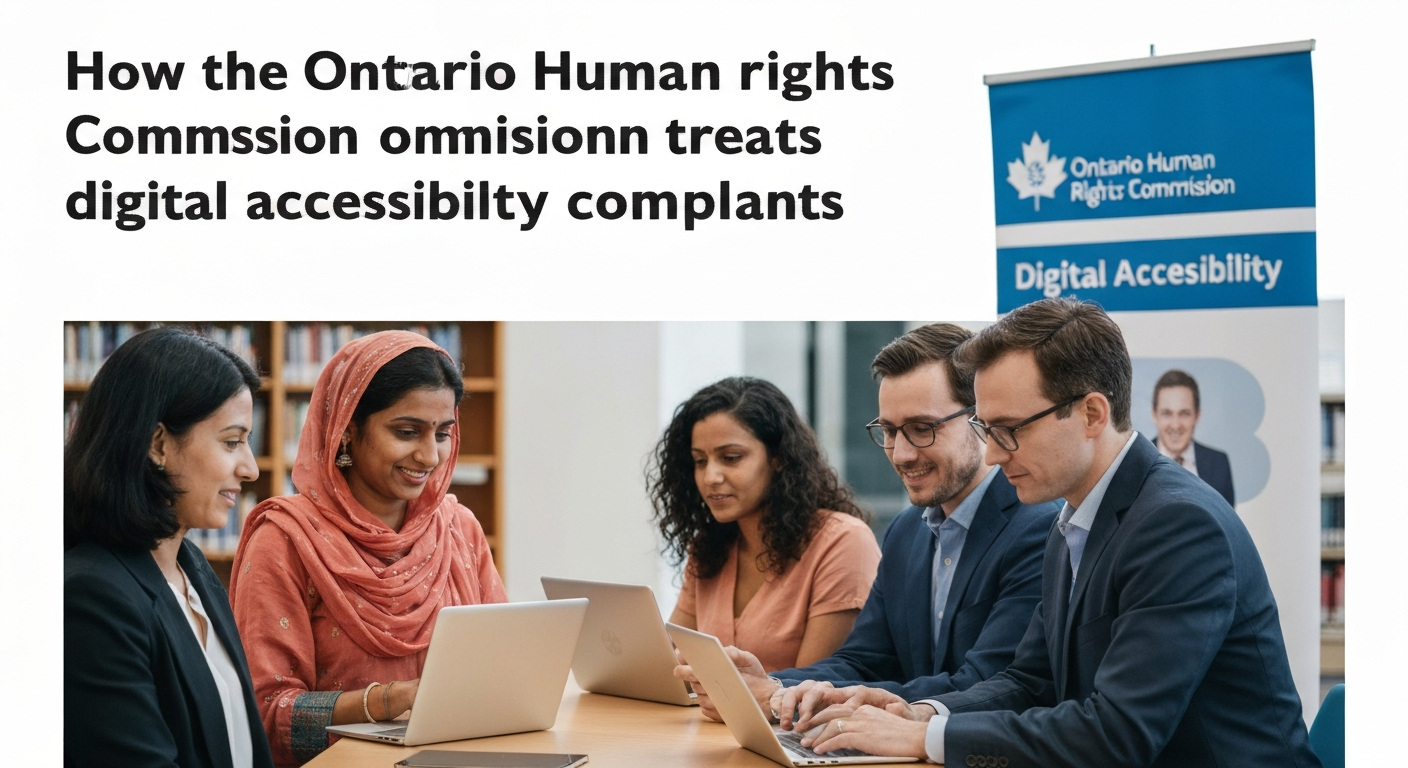
Understanding the OHRC's Role in Digital Accessibility Complaints
The Ontario Human Rights Commission (OHRC) approaches digital accessibility complaints not as technical compliance failures, but as potential instances of disability-based discrimination under the Ontario Human Rights Code. This means that while the Accessibility for Ontarians with Disabilities Act (AODA) sets broad standards, a person whose disability-related inability to access a website, app, or digital service blocks their equal participation can apply to the Human Rights Tribunal of Ontario (HRTO), for example a student unable to register for a course online because of an inaccessible form.
The OHRC is an independent statutory body tasked with promoting and enforcing human rights across Ontario. Its mandate extends to the digital realm because the Code prohibits discrimination based on disability in accessing goods, services, and facilities. When a digital platform, like a municipal government's online portal or a retailer's e-commerce site, creates an insurmountable barrier for a disabled person, the OHRC views this as a potential violation of their human rights.
The OHRC does not investigate or mediate individual complaints, and it does not issue binding orders. Individuals file applications directly with the Human Rights Tribunal of Ontario (HRTO). The OHRC can intervene in an application or bring its own application in the public interest. It is the HRTO, not the OHRC, that ultimately hears the evidence, interprets the Code, and makes legally enforceable decisions regarding discrimination, including those stemming from digital accessibility barriers.
Understanding this distinction is crucial for any complainant. Your application to the HRTO is where you set out the discrimination you experienced, provide evidence, and take part in mediation or a hearing. However, the ultimate determination of rights and remedies in how the Ontario Human Rights Commission treats digital accessibility complaints rests with the HRTO, which functions as an adjudicative body with the power to order specific accommodations or compensation.
When to Consider Filing a Digital Accessibility Complaint with the OHRC
When to Consider Filing a Digital Accessibility Complaint with the OHRC
Many Ontarians struggle to understand the specific role of the Ontario Human Rights Commission (OHRC) in digital accessibility, often conflating its mandate with the Accessibility for Ontarians with Disabilities Act (AODA). The HRTO, not the OHRC, is the body that receives applications when you believe you have experienced individual discrimination due to an inaccessible digital platform, not merely a general lack of AODA compliance. Its focus is on enforcing the Ontario Human Rights Code, which prohibits discrimination based on disability across various social areas, including access to goods, services, and facilities. Your issue must directly relate to a barrier preventing you from accessing a service, good, or facility online because of your disability. For instance, if a disabled person cannot complete an online registration form for a municipal program in Ottawa due to poor screen reader compatibility, or if critical information on a provincial government website, like details about the Ontario Disability Support Program (ODSP), is inaccessible via keyboard navigation, these are potential grounds for a complaint. The Code provides a mechanism for individual complaints of discrimination when accessibility expectations, including those related to digital access, are not met. The OHRC does not proactively audit organizations for AODA compliance. Individual complaints where a person has been denied equal access to digital services or information due to their disability go to the HRTO as applications. This distinction is crucial; a general complaint that a website "isn't accessible" without a specific instance of personal harm or exclusion will likely be redirected or dismissed. The commission's role is to promote and enforce human rights, which includes ensuring disabled people can participate fully in society, including online. Therefore, before considering how the Ontario Human Rights Commission treats digital accessibility complaints, first determine if your situation involves a direct discriminatory barrier. This involves a clear link between your disability, the digital barrier, and the denial of access to a good, service, or facility that would otherwise be available to non-disabled individuals. If that link is present, an application to the HRTO becomes a viable path for redress.Tips for Building a Strong Digital Accessibility Complaint
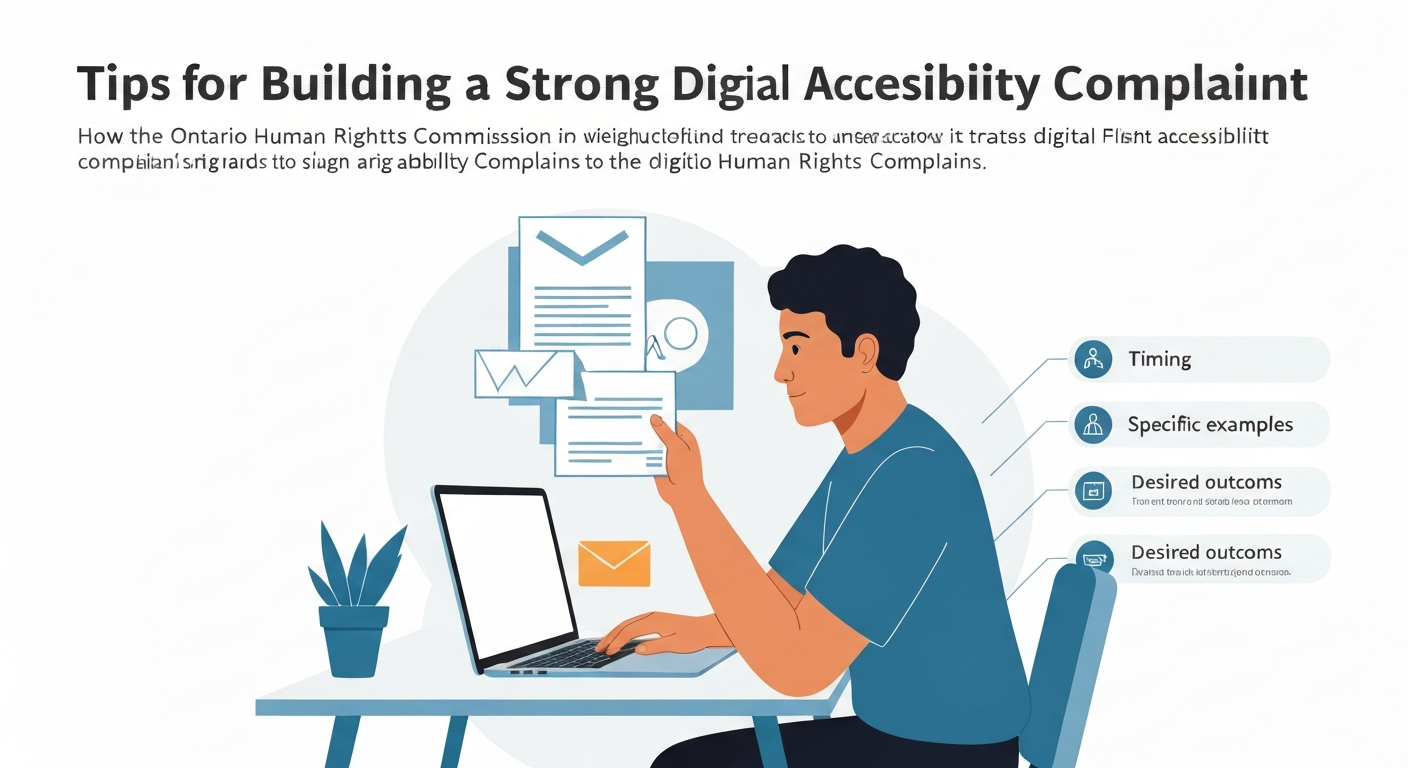
The Step-by-Step Process: How to File Your Complaint
Initiating a digital accessibility complaint with the Human Rights Tribunal of Ontario (HRTO) can feel complex, but breaking it down into clear stages simplifies the process. Understanding each step helps ensure your complaint is robust and effectively communicated, setting a strong foundation for addressing the discrimination you've experienced.
Initial Contact and Form Acquisition
Your journey begins by contacting the Human Rights Tribunal of Ontario (HRTO) directly. While the Ontario Human Rights Commission (OHRC) promotes human rights, individual complaints of discrimination, including those related to digital accessibility, are filed with the HRTO. You will need to obtain Form 1, the official application form for a human rights complaint. For example, if a disabled person in Kingston cannot access their online municipal property tax portal due to WCAG 2.1 AA failures, they would seek Form 1 from the HRTO to detail that specific barrier.
Gathering Comprehensive Information
Before filling out Form 1, compile all relevant evidence. This includes screenshots of inaccessible digital interfaces, dates and times you encountered barriers, specific error messages, and any communications with the organization regarding the issue. Detail the impact of the digital barrier on your ability to access goods, services, or facilities. For instance, an autistic student unable to complete an online course registration at a university due to inaccessible CAPTCHAs should document every instance, including attempts to contact the registrar's office for alternative access.
Completing the HRTO's Application Form
Fill out Form 1 thoroughly and clearly. State the facts of the discrimination, identifying the specific digital barrier and how it relates to a prohibited ground under the Ontario Human Rights Code, such as disability. Clearly articulate the remedy you seek, which might range from specific accessibility improvements (e.g., making a specific government website WCAG compliant) to compensation for injury to dignity, feelings, and self-respect. Avoid emotional language; focus on objective facts and the legal basis of your claim.
How the Application Reaches the Respondent
Once your Form 1 is complete, the HRTO sends a copy of the application to the organization you are complaining against (the "respondent"), so you do not serve it yourself. Complaints about federally regulated organizations, such as banks, airlines and telecommunications companies, are not heard by the HRTO and go to the Canadian Human Rights Commission instead.
Responding to the Respondent's Reply
After receiving the application, the respondent has 35 days to file a Response (Form 2) with the HRTO.
What Happens After You File? Key Stages and Timelines
After you file a digital accessibility complaint with the Human Rights Tribunal of Ontario (HRTO), the process begins with an intake and screening phase. The HRTO, not the OHRC, is the body that receives and adjudicates these complaints, ensuring they fall within its jurisdiction under the Ontario Human Rights Code. This initial review confirms your complaint meets formal requirements, such as identifying a protected ground like disability and alleging discrimination in an area like services or goods. For instance, if a disabled person in Ottawa files a complaint because a provincial government website is inaccessible to screen readers, the HRTO would confirm the complaint alleges discrimination based on disability in a service.
Many applications then proceed to mediation, which the HRTO can schedule and require parties to attend. Here, a neutral third party from the HRTO works with both the applicant and the respondent (e.g., a university, a municipality, a provincial ministry) to explore a mutually agreeable settlement. If mediation is unsuccessful, the application moves to hearing preparation, involving the exchange of evidence and legal arguments. This stage can be time-consuming; a complex case involving a large organization's online platform, for example, might require extensive documentation and expert reports from both sides. Ultimately, if no settlement is reached, the complaint proceeds to a hearing before the HRTO, where evidence is formally presented, and a decision is made.
The timeline for an HRTO application can vary significantly. Some cases settle early, while complex or highly contested cases can take much longer. Complainants should anticipate this variability and prepare for a process that demands patience, particularly during the evidence gathering and scheduling phases. The HRTO's caseload and the complexity of the digital accessibility barriers alleged will directly impact the overall duration.
Potential Outcomes and Remedies for Digital Accessibility Complaints
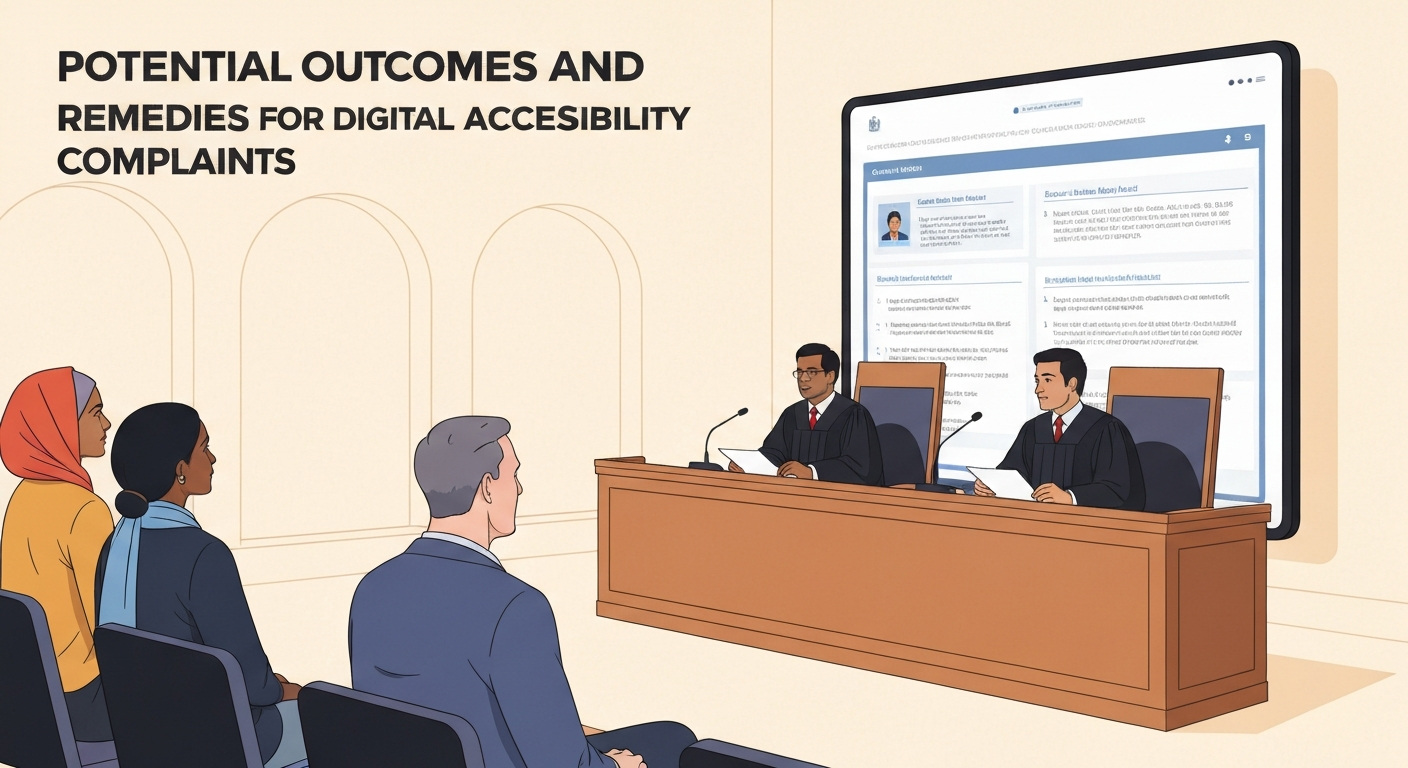
Potential Outcomes and Remedies for Digital Accessibility Complaints
Successful digital accessibility complaints before the Human Rights Tribunal of Ontario (HRTO) rarely result in a simple "win" or "lose" judgment; instead, they often lead to tailored remedies aimed at addressing the discrimination and preventing its recurrence. Many cases resolve through mediation, leading to confidential settlement agreements. These agreements can include monetary compensation for injury to dignity, feelings, and self-respect. For example, a person with low vision denied access to an online service might receive compensation for the distress and inconvenience caused. The HRTO can also order specific, actionable accessibility improvements. This might mean an order for a provincial government agency to remediate its public-facing website to meet WCAG 2.1 AA standards within a fixed timeframe, or to ensure all new digital content, like PDF forms, is provided in accessible formats. Beyond individual compensation and specific technical fixes, remedies often include broader systemic changes. The Tribunal might require an organization to develop or revise its accessibility policies and procedures, ensuring future digital projects embed accessibility from the outset. This could involve mandatory accessibility training for all staff involved in content creation or web development, or the appointment of a dedicated accessibility lead. In cases where the discrimination has significant public impact, the HRTO can issue public interest remedies. Under section 45.2 of the Human Rights Code, the Tribunal can order a party to do anything it believes the party ought to do to promote compliance with the Code, including about future practices, so remedies can benefit the broader community, not just the individual applicant. Ultimately, the goal of these remedies is to restore the complainant's dignity, compensate for harm, and ensure equitable access for other disabled people. The specific outcome depends heavily on the unique facts of each case, the evidence presented, and the willingness of all parties to engage constructively in the resolution process.OHRC vs. AODA: Clarifying the Differences and Overlaps
Confusion often arises between the Ontario Human Rights Code and the Accessibility for Ontarians with Disabilities Act (AODA) when addressing digital barriers. While both aim to foster an accessible Ontario, their mechanisms and scope differ significantly, impacting how the Ontario Human Rights Commission treats digital accessibility complaints.
| Feature/Aspect | Ontario Human Rights Code (via OHRC/HRTO) | Accessibility for Ontarians with Disabilities Act (AODA) |
|---|---|---|
| Primary Focus | Addresses individual complaints of discrimination based on disability, including digital access barriers, under protected social areas like services and employment. | Sets systemic, proactive accessibility standards for organizations (e.g., WCAG 2.0 AA for public websites) to achieve a barrier-free Ontario by 2025. |
| Enforcement Body | Human Rights Tribunal of Ontario (HRTO) receives and decides applications; the Ontario Human Rights Commission (OHRC) does not handle individual complaints. | Ministry for Seniors and Accessibility monitors compliance and conducts audits; issues orders and penalties for non-compliance. |
| Nature of Remedy | Individualized remedies for discrimination (e.g., compensation, specific accommodations, policy changes). | Systemic compliance with regulations; fines and compliance orders for organizations failing to meet standards. |
| Initiator | Individuals alleging discrimination file complaints. The OHRC can also initiate inquiries into systemic issues. | Government-mandated standards apply broadly to obligated organizations. Public can report non-compliance, but no individual "complaint" mechanism for discrimination. |
| Relationship to Digital Accessibility | Digital barriers (e.g., an inaccessible government website, an online store unusable by a screen reader) can be grounds for an individual discrimination complaint. | Mandates specific digital accessibility requirements, such as making public websites and web content conform to WCAG 2.0 Level AA by certain dates for specific organizations. |
An AODA violation does not automatically mean a Human Rights Code violation, as AODA sets minimum standards. However, a persistent failure to meet AODA requirements, or other significant digital barriers, can certainly form the basis of an individual complaint of discrimination under the Code, providing a pathway for recourse that AODA enforcement alone does not offer.
Frequently Asked Questions
What is the OHRC's role in website accessibility complaints?
How do I prepare a strong digital accessibility complaint for OHRC?
When can I complain to OHRC about website accessibility?
What happens after I file a digital accessibility complaint with the OHRC?
Is OHRC or AODA better for digital accessibility issues in Ontario?
Keep reading
All articles →
Automated Accessibility Scanners vs. Testing with Assistive Technology Users
Automated accessibility scanners are vital for a baseline, but relying solely on them misses most WCAG issues. The key is understanding their distinct roles, not choosing one over the other for full compliance.

Switch Access, Eye Tracking and Voice Control: How Each Works and Where It Fits
Many disabled people with limited mobility face barriers to computer use due to universal mouse and keyboard assumptions. Switch access, eye tracking, and voice control offer specialized pathways, enabling interaction through minimal movement or voice.

CAPTCHA and Online Verification: Accessibility Barriers and Better Alternatives
Why CAPTCHA and similar verification steps shut out disabled people, what WCAG and Canadian accessibility law require, and verification methods that work for everyone.