

Ontario Public Sector: AODA Procurement Toolkit for Compliance & Beyond
The AODA dictates specific accessibility procurement requirements for Ontario public sector organizations, aiming for a fully accessible province by 2025. Many still treat accessibility as a post-purchase add-on, leading to costly retrofits and legal exposure.
Understanding AODA's Procurement Requirements: What the Law Says
While the Accessible Canada Act governs federal entities, the Accessibility for Ontarians with Disabilities Act (AODA), 2005, dictates specific accessibility procurement requirements for Ontario public sector organizations, aiming for a fully accessible province by 2025. Even so, treating accessibility as a post-purchase add-on rather than an embedded prerequisite can lead to costly retrofits and legal exposure.
The Integrated Accessibility Standards Regulation (IASR) O. Reg 191/11 provides the granular detail. Specifically, section 5 of its general requirements says the Government of Ontario, the Legislative Assembly and designated public sector organizations must incorporate accessibility design, criteria and features when procuring or acquiring goods, services or facilities, except where it is not practicable to do so. This means ensuring that new purchases, from playground equipment for a municipal park in Kitchener to a new learning management system for a college, do not create or perpetuate barriers for disabled people.
Compliance deadlines for various AODA standards have already passed for most public sector organizations, making proactive integration of accessibility into procurement workflows non-negotiable. For instance, the Design of Public Spaces Standards applied to newly built or redeveloped public spaces from January 1, 2016 for designated public sector organizations. Failure to meet these requirements can result in significant penalties for organizations. This financial risk underscores the necessity of a robust, proactive approach to accessible procurement, moving beyond mere compliance to foster genuinely inclusive public services and infrastructure across Ontario.
Key Accessibility Standards: IASR, WCAG 2.0 AA, and Their Application to Procurement
Compliance with Ontario's accessibility legislation extends beyond general guidelines; it hinges on specific technical benchmarks. Public sector organizations in Ontario must anchor their procurement decisions in the Integrated Accessibility Standards Regulation (IASR) O. Reg 191/11 and WCAG 2.0 Level AA to meet legal mandates for accessibility procurement requirements for Ontario public sector organizations.
The IASR directly impacts what public bodies procure, from the design of public spaces to the provision of accessible formats and communication supports. For example, a municipality procuring new bus shelters must ensure the design adheres to the Design of Public Spaces Standards within the IASR, which dictates accessible routes and clear paths of travel. Similarly, a provincial ministry acquiring a new document management system should consider whether it helps staff meet the Information and Communications Standards duty to provide accessible formats on request.
For information and communications technology (ICT) procurement, WCAG 2.0 Level AA is the critical benchmark. Under section 14 of the IASR, designated public sector organizations must make their internet websites and web content conform to it. A school board procuring a new online learning platform can specify WCAG 2.0 Level AA compliance in its RFP, ensuring features like keyboard navigation, sufficient colour contrast, and alt-text for images are built-in from the start. This technical specificity prevents costly retrofits later.
Understanding these standards allows procurement teams to articulate clear, measurable accessibility specifications in their requests for proposals (RFPs) and during vendor evaluations. It also ensures the procurement process itself is accessible, allowing vendors with disabilities to participate fairly. These are not merely suggestions; they are legal obligations, with potential penalties for non-compliance, as outlined by applicable law.
The table below outlines key accessibility standards and their direct application within the procurement lifecycle for Ontario public sector organizations.
| Standard Reference | Procurement Aspect | Specific Application Example | ||||||||||||||
|---|---|---|---|---|---|---|---|---|---|---|---|---|---|---|---|---|
| IASR O. Reg 191/11, Section 5 | Procurement of Goods, Services & Facilities | Specifying accessible formats for training materials purchased for staff, ensuring vendor portals are accessible. | ||||||||||||||
| IASR O. Reg 191/11, Part II (Info & Comm.) | ICT Procurement (Websites, Software)
Integrating Accessibility into Your Procurement Process: A Step-by-Step GuideEmbedding AODA accessibility into procurement is less about adding a new task and more about refining existing processes. It requires a systematic approach to ensure compliance isn't an afterthought but an integral part of every purchasing decision within Ontario public sector organizations.
1
Pre-Procurement Needs AssessmentBegin by conducting an accessibility needs assessment during initial planning. For instance, when procuring new library management software for the City of Toronto, identify specific requirements for screen reader compatibility, keyboard navigation, and alternative text support. This proactive step ensures that the core needs of disabled users are understood before any vendors are engaged.
2
Crafting Accessible RFPs and TendersDevelop clear, measurable accessibility criteria for your Request for Proposals (RFPs) and tenders. Every RFP issued by a provincial ministry, like the Ministry of Education, should include explicit clauses referencing WCAG 2.0 Level AA for digital products or the AODA Design of Public Spaces Standard for physical infrastructure. Require vendors to detail how their offerings meet these standards, moving beyond generic "AODA compliant" statements.
3
Vendor Evaluation and SelectionImplement a robust process for evaluating vendor accessibility claims. Request specific documentation, such as Voluntary Product Accessibility Templates (VPATs) based on WCAG 2.1, or third-party accessibility audit reports. For a new learning platform for an Ontario college, conduct live demonstrations with disabled users or accessibility experts to verify claims, rather than relying solely on written submissions.
4
Contract Management and MonitoringEnsure contractual language obligates vendors to maintain AODA compliance throughout the contract term. Include clauses for regular accessibility audits or updates, especially for software or web services. Clearly define consequences for non-compliance, such as remediation timelines or penalties, reinforcing the importance of sustained accessibility for goods and services. Specific Considerations for Different Procurement Types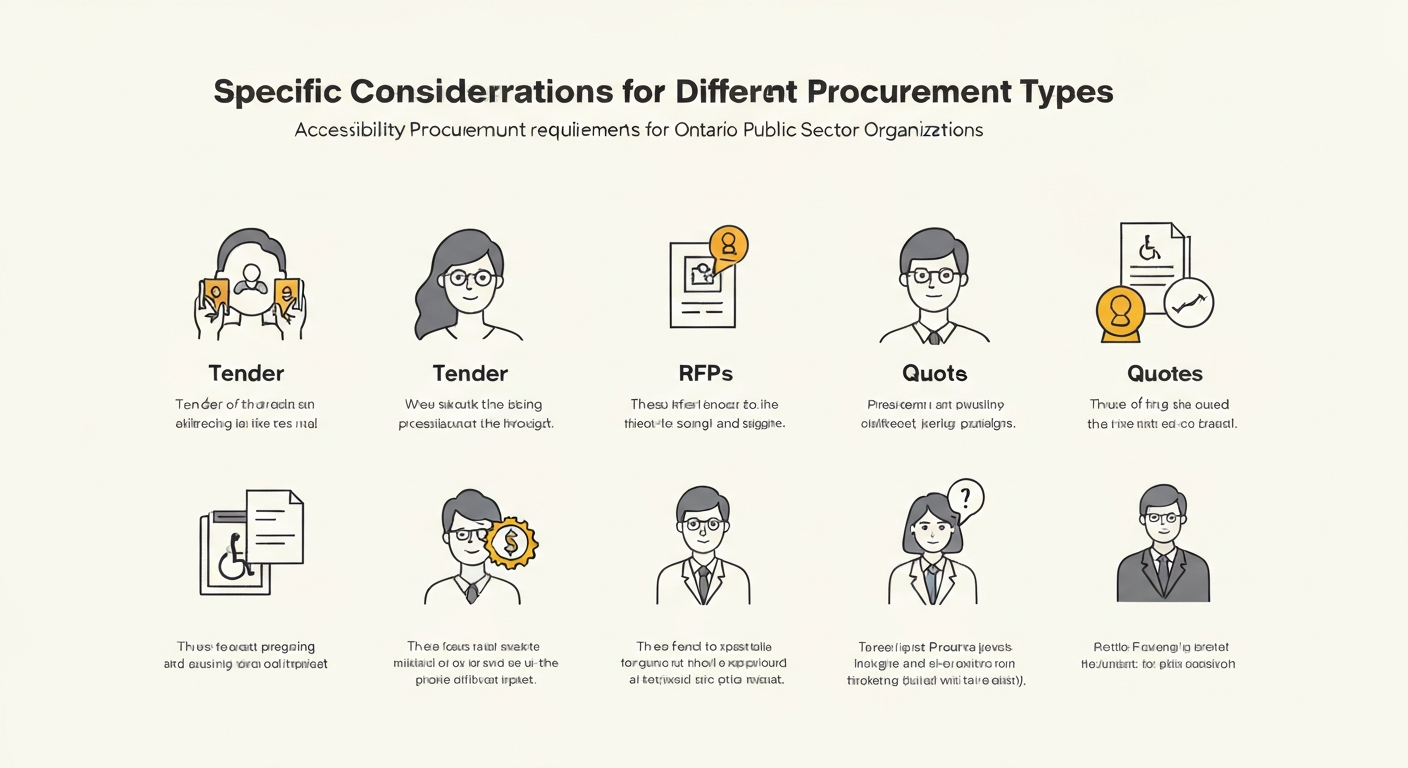 Applying AODA accessibility requirements demands specific considerations tailored to the procurement category. Blanket approaches often miss crucial details, leading to compliance gaps or inefficient resource allocation, particularly for diverse purchases across Ontario's public sector.
For all procurement types, ensure any associated documentation, manuals, or user guides are available in accessible formats upon request, aligning with the Information and Communications Standards of the IASR. These specific considerations are central to meeting accessibility procurement requirements for Ontario public sector organizations. Evaluating Vendor Accessibility Claims and Ensuring Ongoing ComplianceEvaluating Vendor Accessibility Claims and Ensuring Ongoing ComplianceVerifying a vendor's accessibility claims requires more than just reviewing self-declarations. Public sector organizations in Ontario must demand concrete evidence, such as Voluntary Product Accessibility Templates (VPATs) detailing conformance to WCAG 2.1 AA, or independent accessibility audit reports. For instance, when procuring a new learning management system for a college in Ottawa, the procurement team should request a VPAT specific to the version being offered. Without this documentation, it's impossible to objectively assess whether the solution meets the Integrated Accessibility Standards Regulation (IASR) requirements for information and communications technology. Beyond documentation, hands-on testing is crucial. A procurement manager for the City of Toronto, evaluating new self-service kiosks, could arrange a pilot with disabled community members to directly assess usability. This direct engagement reveals practical barriers that reports might miss. Furthermore, embedding specific accessibility performance metrics into contracts, like full conformance with WCAG 2.1 AA for all public-facing digital interfaces," allows for regular monitoring and reporting. The Accessibility for Ontarians with Disabilities Act (AODA) compliance isn't a one-time check; it's an ongoing commitment. Addressing post-award issues is equally vital. Contracts for accessibility procurement requirements for Ontario public sector organizations should outline clear remediation plans and potential penalties if non-compliance is discovered after deployment. For example, if a newly installed municipal website in Sudbury fails an independent accessibility audit six months into the contract, the vendor should be contractually obligated to fix issues within a defined timeframe, potentially facing financial penalties for delays. This structured approach ensures accountability and continuous improvement. By implementing these rigorous evaluation and monitoring practices, public sector organizations can move beyond mere compliance, ensuring that procured goods and services genuinely serve all Ontarians, including disabled people. This proactive stance mitigates legal risks, which can include significant fines for corporations. Training and Resources for Public Sector Procurement TeamsEquipping procurement professionals with targeted training is not optional; it is foundational for meeting the Accessibility for Ontarians with Disabilities Act (AODA) requirements. Many Ontario public sector organizations struggle with integrating accessibility into complex procurement workflows, often due to a lack of specific training beyond general AODA awareness. The IASR requires training on its accessibility standards and the Human Rights Code that is appropriate to each person's duties, so for procurement staff it should cover the procurement rules in section 5 of O. Reg 191/11, ensuring staff understand their practical application when sourcing everything from new IT systems to office furniture. Developing internal accessibility champions within procurement teams amplifies this foundational training. For instance, a senior procurement officer in the City of Ottawa could become the go-to expert for evaluating vendor accessibility claims, guiding colleagues on appropriate language for Requests for Proposals (RFPs) and contract clauses. A centralized repository of accessible RFP templates, sample contract language, and vendor evaluation checklists, perhaps hosted on an internal SharePoint site, standardizes practices and reduces the risk of non-compliance across departments. This approach addresses the common pain point of lacking actionable tools for accessible procurement. Beyond internal resources, procurement teams should actively leverage external guides from the Ontario government and engage with accessibility consultants when navigating complex procurements, particularly for large-scale IT projects or infrastructure developments. This continuous learning environment ensures that public sector organizations not only meet current accessibility procurement requirements for Ontario public sector organizations but also adapt to future standards and evolving best practices, moving beyond mere compliance to genuinely inclusive purchasing. Addressing Common Challenges in Accessible Procurement Even with clear regulations, Ontario public sector organizations often encounter practical barriers when implementing accessibility procurement requirements for Ontario public sector organizations. Addressing these challenges proactively ensures smoother integration and avoids costly missteps. Common Hurdles
Actionable Solutions
Addressing these challenges requires a strategic, phased approach, coupled with strong internal advocacy for the benefits of inclusive design. By reframing challenges as opportunities for innovation, public sector organizations can build more accessible and resilient procurement practices. The Business Case for Accessible Procurement: Beyond ComplianceThe Business Case for Accessible Procurement: Beyond ComplianceFocusing solely on avoiding AODA penalties overlooks the strategic value of accessible procurement. While compliance is a legal imperative for Ontario public sector organizations, proactive integration of accessibility standards into procurement provides significant long-term advantages that extend far beyond minimum legal requirements. This approach shifts accessibility from a compliance burden to a strategic asset, benefiting the organization, its users, and the wider public. Accessible products and services serve a broader public, including disabled Ontarians, seniors, and people with temporary impairments. For example, procuring a website that meets WCAG 2.1 AA standards ensures usability for screen reader users, but also improves navigation for all users through clear layouts and consistent design. This expanded reach means government services and information are truly available to everyone in Ontario, enhancing public engagement and trust. Demanding accessibility through your procurement processes also sparks innovation among vendors. When a public sector organization specifies WCAG 2.1 AA for new digital platforms, it pushes software developers to build more inclusive features, leading to better, more intuitive solutions for all users, not just disabled people. This commitment enhances an organization's reputation as a responsible and inclusive entity, fostering public trust. A strong track record in meeting accessibility procurement requirements for Ontario public sector organizations positions the entity as a leader in social responsibility, mitigating legal and reputational risks before they materialize. By embedding accessibility into every stage of the procurement lifecycle, from initial planning to contract management, organizations cultivate a culture of inclusivity that benefits both internal operations and external service delivery. This proactive stance ensures that public funds are invested in solutions that serve the entire population effectively, aligning with the broader goal of making Ontario fully accessible by 2025.AODA Procurement Checklist for Ontario Public Sector Organizations: Your ToolkitEmbedding accessibility early in the procurement lifecycle prevents costly retrofits and ensures compliance with the Accessibility for Ontarians with Disabilities Act (AODA). This toolkit provides Ontario public sector organizations with a clear, actionable checklist to integrate accessibility into every stage, from planning to post-award monitoring. AODA Procurement Toolkit: Your Checklist
Planning Phase
Conduct a thorough accessibility needs assessment. Identify relevant AODA, IASR, and WCAG 2.1 AA requirements specific to the goods or services being procured. For instance, if procuring a new public-facing website for a municipality, WCAG 2.0 AA is the legal minimum under section 14 of O. Reg. 191/11, and WCAG 2.1 AA can be specified as a higher target.
RFP Development
Include explicit accessibility specifications, mandatory compliance clauses, and requirements for vendors to submit detailed accessibility documentation, such as a Voluntary Product Accessibility Template (VPAT) 2.x, as part of their proposal.
Vendor Evaluation
Establish a rigorous process for verifying vendor accessibility claims. This includes reviewing VPATs, requesting demonstrations with assistive technologies, and potentially conducting targeted accessibility audits of proposed solutions. Don't rely solely on self-attestation.
Contract Award
Ensure all contracts explicitly incorporate AODA compliance terms, ongoing monitoring requirements, and clear remediation clauses for any accessibility deficiencies identified post-award. An Ontario school board, for example, must include these clauses when contracting for new learning management software.
Post-Award Monitoring & Documentation
Implement a system to continuously monitor vendor compliance throughout the contract term. All accessibility considerations, evaluations, and compliance efforts, including any remediation plans, must be thoroughly documented for audit purposes, as non-compliance can incur significant penalties for organizations. Following these steps systematically helps Ontario public sector organizations meet their accessibility procurement requirements under AODA. This structured approach not only mitigates legal risks and potential penalties but also ensures that the goods and services procured are genuinely usable by all Ontarians, including disabled people. Frequently Asked Questions about AODA ProcurementNavigating the nuances of accessibility in public sector purchasing often raises specific questions. Here are clear answers to common inquiries regarding accessibility procurement requirements for Ontario public sector organizations. Quick Reference: AODA Procurement FAQs
Main AODA Regulations?
The Integrated Accessibility Standards Regulation (IASR), O. Reg 191/11, governs procurement through section 5 of its general requirements. Section 5 requires the Government of Ontario, the Legislative Assembly and designated public sector organizations to incorporate accessibility design, criteria and features when procuring goods, services or facilities, unless it is not practicable.
Verifying WCAG 2.0 AA Compliance?
Require a current Voluntary Product Accessibility Template (VPAT) from vendors. Supplement this with independent third-party audits or internal user testing involving disabled people.
Penalties for Non-Compliance?
Non-compliance can lead to significant financial penalties. Organizations face significant financial penalties, as outlined by the AODA. Individuals, such as directors, can also face significant daily penalties.
Small Procurement Exemptions?
No. AODA requirements generally apply to all procurements, regardless of size or value, if the goods, services, or facilities could impact accessibility. The focus is on the nature of the procurement, not its scale.
Official Resources?
The Ontario Ministry for Seniors and Accessibility provides official guidelines and resources. The Accessibility Directorate of Ontario also publishes compliance manuals and updates relevant to government procurement. The Ontario Human Rights Commission (OHRC) also offers guidance on human rights considerations.
Review Frequency?
Procurement processes should be reviewed annually, or whenever significant changes occur in AODA regulations or internal purchasing policies. This ensures continuous alignment with evolving standards and best practices. Embedding these answers into your daily procurement operations helps prevent common pitfalls. Proactive engagement with AODA standards from the outset of any purchasing decision streamlines compliance and fosters a more inclusive public service environment across Ontario. Frequently Asked QuestionsWhat are the AODA procurement requirements for Ontario public sector organizations?Section 5 of Ontario's O. Reg. 191/11 under the AODA requires designated public sector organizations to incorporate accessibility design, criteria and features when procuring goods, services, or facilities. This means integrating accessibility criteria into all stages, from design specifications to contract awards. The only exception is where doing so is not practicable, and the organization must provide an explanation on request. For example, a municipality buying new library software can require WCAG 2.1 AA as its accessibility criteria. Documenting these considerations and any exceptions is a critical compliance step. How can I integrate accessibility into my public sector procurement process in Ontario?Integrating accessibility into Ontario public sector procurement begins by embedding requirements early, from needs assessment through contract award. Specify clear accessibility standards, like WCAG 2.1 AA for digital products, in all Request for Proposals (RFPs) and contracts. Evaluate vendor submissions not just on cost or functionality, but also on their demonstrated commitment to accessibility and their proposed solutions. For instance, a provincial agency procuring a new HR system should require vendor accessibility audits and user testing with disabled employees. Why is accessible procurement important for Ontario public sector beyond just AODA compliance?Beyond AODA compliance, accessible procurement helps Ontario public services serve all residents, including disabled people. It minimizes the risk of Ontario Human Rights Code complaints, which can be costly and damage public trust. Proactively procuring accessible solutions often leads to better usability for everyone and avoids expensive retrofits later. For example, a city investing in accessible transit kiosks enhances independent access for mobility-disabled people and improves convenience for all users. Can Ontario public sector organizations get a checklist for AODA procurement compliance?While no single official "AODA procurement checklist" covers every scenario, Ontario public sector organizations can utilize various resources. The Ontario government provides guidance documents, and many accessibility consultants offer tailored checklists and frameworks. These tools help ensure key requirements, such as the section 5 procurement rule and the WCAG 2.0 AA website rule in section 14 of O. Reg. 191/11, are addressed. However, a checklist is a starting point; organizations must also develop internal expertise and conduct thorough due diligence specific to each procurement. Are there specific accessibility standards like WCAG 2.0 AA that apply to public sector procurement in Ontario?Yes, the AODA's Information and Communications Standard explicitly references WCAG 2.0 Level AA for public sector websites and web content. While WCAG 2.0 AA is the legal minimum, many organizations now specify WCAG 2.1 Level AA as a best practice for broader accessibility. For physical spaces, the Design of Public Spaces Standards in the IASR apply to newly constructed or redeveloped elements. The specific standard depends directly on the nature of the goods or services being acquired. Keep readingAll articles → Automated Accessibility Scanners vs. Testing with Assistive Technology UsersAutomated accessibility scanners are vital for a baseline, but relying solely on them misses most WCAG issues. The key is understanding their distinct roles, not choosing one over the other for full compliance.  Switch Access, Eye Tracking and Voice Control: How Each Works and Where It FitsMany disabled people with limited mobility face barriers to computer use due to universal mouse and keyboard assumptions. Switch access, eye tracking, and voice control offer specialized pathways, enabling interaction through minimal movement or voice.  CAPTCHA and Online Verification: Accessibility Barriers and Better AlternativesWhy CAPTCHA and similar verification steps shut out disabled people, what WCAG and Canadian accessibility law require, and verification methods that work for everyone. |